

Newborn Screening Contaminated Blood Collection
The abbreviation "CT" is used by the Bureau of Clinical Laboratories' Newborn Screening Laboratory for submitted specimens that are contaminated. If the specimen is rejected due to "Contamination," another specimen must be collected. This delays the screening process, causes additional stress to the baby and parents, and most importantly, slows the possible detection of a life-threatening disorder.
Steps to Collecting a Satisfactory Newborn Screen
- Puncture the heel with a disposable lancet deep enough to reach the skin’s primary blood supply, yet shallow enough to prevent heel or bone injury.
- Apply 5 large (approximately 0.1 cc) drops of blood evenly to the filter paper printed circles.
- Do not remove the filter paper until the blood has completely soaked through to the other side.
- Specimens should be dried in a horizontal position for at least 4 hours.
Click the image below to enlarge it.
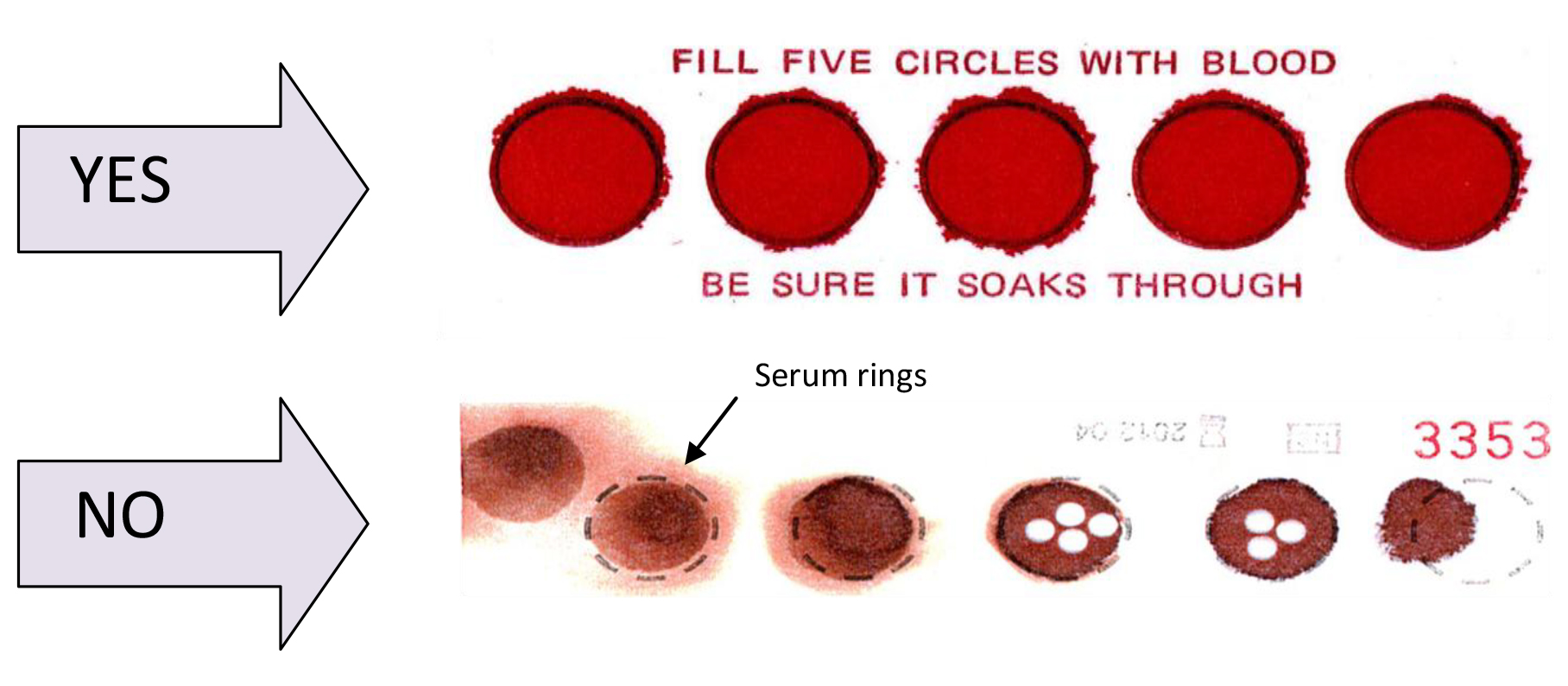
Specimens may become contaminated when the filter paper comes in contact with gloved or ungloved hands or substances such as alcohol, hand lotion, formula, antiseptic solutions, water, or powder either before or after blood specimen collection. Make sure to dry the specimen on a rack away from any of these substances and not to touch the specimen collection portion of the form.
The first drop of blood that forms at the puncture site may be contaminated with alcohol, tissue, or tissue fluids. It must be wiped away in order to avoid diluting the specimen, which can adversely affect the test results.
Steps to Collecting a Satisfactory Newborn Screen
- Puncture the heel with a disposable lancet deep enough to reach the skin's primary blood supply, yet shallow enough to prevent heel or bone injury.
- Apply 5 large (approximately 0.1 cc) drops of blood evenly to the filter paper printed circles.
- Do not remove the filter paper until the blood has completely soaked through to the other side.
- Specimens should be dried in a horizontal position for at least 4 hours.
Excessive squeezing or "milking" of the area surrounding the puncture site may cause hemolysis and serum rings to form around the drops on the filter paper. This will contaminate the specimen by causing tissue fluids to mix with the specimen.
Page last updated: July 17, 2026


