
Toxicology
The Toxicology Branch works with the public and medical communities, as well as other agencies, to examine whether and how exposure to environmental factors (e.g., toxic materials, noise, dust, heat, mold) where people live, work, learn, and play may harm the public's health.
Toxicological support is provided to assist other agencies or organizations by answering questions about home use of various chemical products, private wells, or unintentional spills. In addition, local environmental assessments enable volunteers and local public and private entities to identify hazards and resources to protect and preserve public health.
Boaters, Anglers, Paddlers, and Swimmers
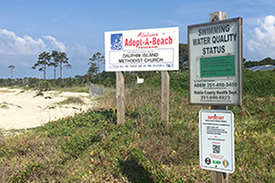
To view statewide water quality information and maps on current sewage spills, treated sewage discharge points, fish consumption advisory locations, and coastal beach monitoring, visit the Alabama Department of Environmental Management or (334) 271-7700. ADPH resources on fish consumption advisories and coastal conditions are below.
Resources
- Coastal Conditions provides Alabama information on beach-related advisories and food, air, and water quality.
- Fish Consumption Advisories offer information about fish from Alabama rivers and lakes that may be contaminated. This information enables people to make informed choices about which fish to eat and how much to eat.
- Seafood Testing Results give you the latest testing data on finfish, shrimp, crab, and oyster.
- The Glossary describes the vocabulary and concepts used in environmental health information.
- Please visit Adult Blood Lead Epidemiology and Surveillance (ABLES) for information on lead exposure.
- For more information on environmentally friendly topics, please visit our Go Green page.
EPA Health Advisories Impact North Alabama Water Systems
The Alabama Department of Public Health is working with the Alabama Department of Environmental Management (ADEM) and federal agencies to determine potential hazards posed by perfluorinated compounds in drinking water in eight north Alabama water systems.
- News Release: Health Department modifies Health Advisories impacting north Alabama water systems (05/23/16)
- News Release: Health Department responds to EPA Health Advisories impacting north Alabama water systems (05/20/16)
The following documents provide further information on perfluorinated compounds and recommended actions for drinking water systems. Please read these fact sheets carefully before contacting the Health Department. They will answer many frequently asked questions about these compounds and their impact.
Page last updated: June 3, 2026


