

Statistics
HIV Surveillance Branch
The HIV Surveillance Branch conducts epidemiologic surveillance through the ongoing and systematic collection, analysis, and interpretation of data related to HIV incidence and prevalence in Alabama. Surveillance staff document and investigate HIV cases reported by physicians, hospitals, laboratories, and other sources; exchange needed information with agencies, states, and other reporting sources; and provide demographic data for use in targeting prevention programs.
The HIV Surveillance Branch is located in the Data Management Division of the Office of HIV Prevention and Care. The Surveillance Branch conducts epidemiologic surveillance through the ongoing and systematic collection, analysis, and interpretation of data related to HIV incidence and prevalence in Alabama. Surveillance staff document and investigate HIV cases reported by physicians, hospitals, laboratories, and other sources; exchange needed information with agencies, states, and other reporting sources; and provide demographic data for use in targeting prevention programs.
Data Requests
STD/HIV REPORT Card
Physicians, dentists, nurses, medical examiners, hospital administrators, nursing home administrators, lab directors, school principals, and day care directors are responsible for reporting Notifiable Diseases in Alabama. The Alabama Notifiable Diseases Rules, Chapter 420-4-1, specifies the diseases and conditions requiring notification, and the time frame and methods for notification. To report a case of HIV (including symptomatic infection, AIDS, CD4 counts and viral load), please use the Communicable Disease REPORT Card.
Archived Reports
Visit Archived Statistics to see quarterly reports and other special reports from previous years.
Quarterly Reports
Continuum of HIV Care
The Preliminary 2025 HIV Continuum of Care depicts persons living with HIV (PWH) in Alabama who are engaged in selected stages of HIV treatment. Successful HIV Prevention and Care programs exhibit high linkage to care among newly diagnosed clients, as well as effective retention in care and adequate viral load suppression among existing HIV-positive clients. As viral load is considered a measure of infectivity, maintaining a suppressed viral load decreases the likelihood of infecting another person and is the focus of Treatment as Prevention strategies. PWH who adhere to antiretroviral treatment and maintain suppressed viral loads can reduce the risk of sexual transmission of HIV by 96 percent. For PWH who reach undetectable levels, there are no documented cases of sexual transmission. This is the premise of the Prevention Access Campaign's Undetectable Equals Untransmittable (U=U) initiative, which the Centers for Disease Control and Prevention supports, agreeing there is "effectively no risk" of sexually transmitting HIV when on treatment and undetectable.
Annual Reports
Cluster Detection
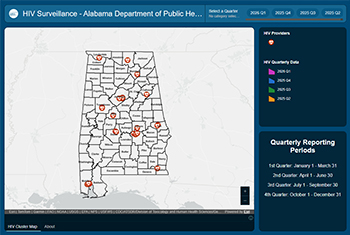
HIV Cluster Dashboard
HIV Cluster Dashboard (Mobile Version)
Page last updated: July 30, 2026


