
Ask Your Doctor
Protect Your Season: Ask Your Doctor
Vaccines can protect against flu, RSV, pneumonia, and COVID-19. One conversation can help you stay healthy all year and enjoy the things you like to do. Ask your doctor which vaccines are right for you and your family.
This page provides brief information on vaccinations recommended for this time of year, along with links to more information.
- Seasonal Influenza (Flu)
- RSV (Respiratory Syncytial Virus)
- Pneumonia
- COVID-19
- Get Vaccinated
- Campaign Materials
Visit our Respiratory Illnesses page, and you'll learn practical steps to protect yourself and your family against respiratory illnesses, guidance on when to be extra cautious, and links to helpful tools and resources.
Seasonal Influenza (Flu)
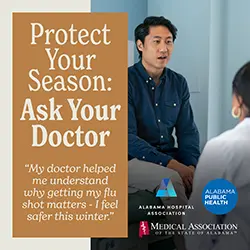
All persons 6 months of age and older, with rare exceptions, are recommended for annual flu vaccination. Vaccination is particularly important for people at higher risk of developing serious flu complications.
Different flu vaccines are approved for use in various age groups.
- Some flu shots are available for children as young as 6 months, while others are recommended for particular age groups or those with certain underlying health conditions. Flu shots are also highly recommended for pregnant people and people with certain chronic health conditions.
- The nasal spray flu vaccine is approved for use in people ages 2 to 49. People who are pregnant and people with certain medical conditions should not receive the nasal spray flu vaccine.
- New for the 2025-2026 season, the nasal spray flu vaccine may be ordered for administration at home by a caregiver aged ≥18 (for children and adolescents aged 2 through 17) or for self-administration (for recipients aged 18 through 49). See Ordering & Using FluMist at Home for more information.
There are many vaccine options to choose from.
- For people younger than 65 years, no flu vaccine is preferred over another as long as the vaccine is age-appropriate.
- There are four flu vaccines that are preferentially recommended for adults 65 years and older: Fluzone High-Dose, Recombinant, Fluad, and mFLUSIVA, the first mRNA seasonal flu vaccine. If none of these flu vaccines are available at the time of administration, people in this age group can receive any other age-appropriate flu vaccine instead.
- Solid organ transplant recipients aged 18 through 64 years who are receiving an immunosuppressive medication regimen may receive Fluzone High-Dose or Fluad as an acceptable option.
For more info, visit:
- Who Needs a Flu Vaccine
- Flu Vaccines Are Important for Children
- Flu & People 65 Years and Older
- Flu and Pregnancy
RSV (Respiratory Syncytial Virus)
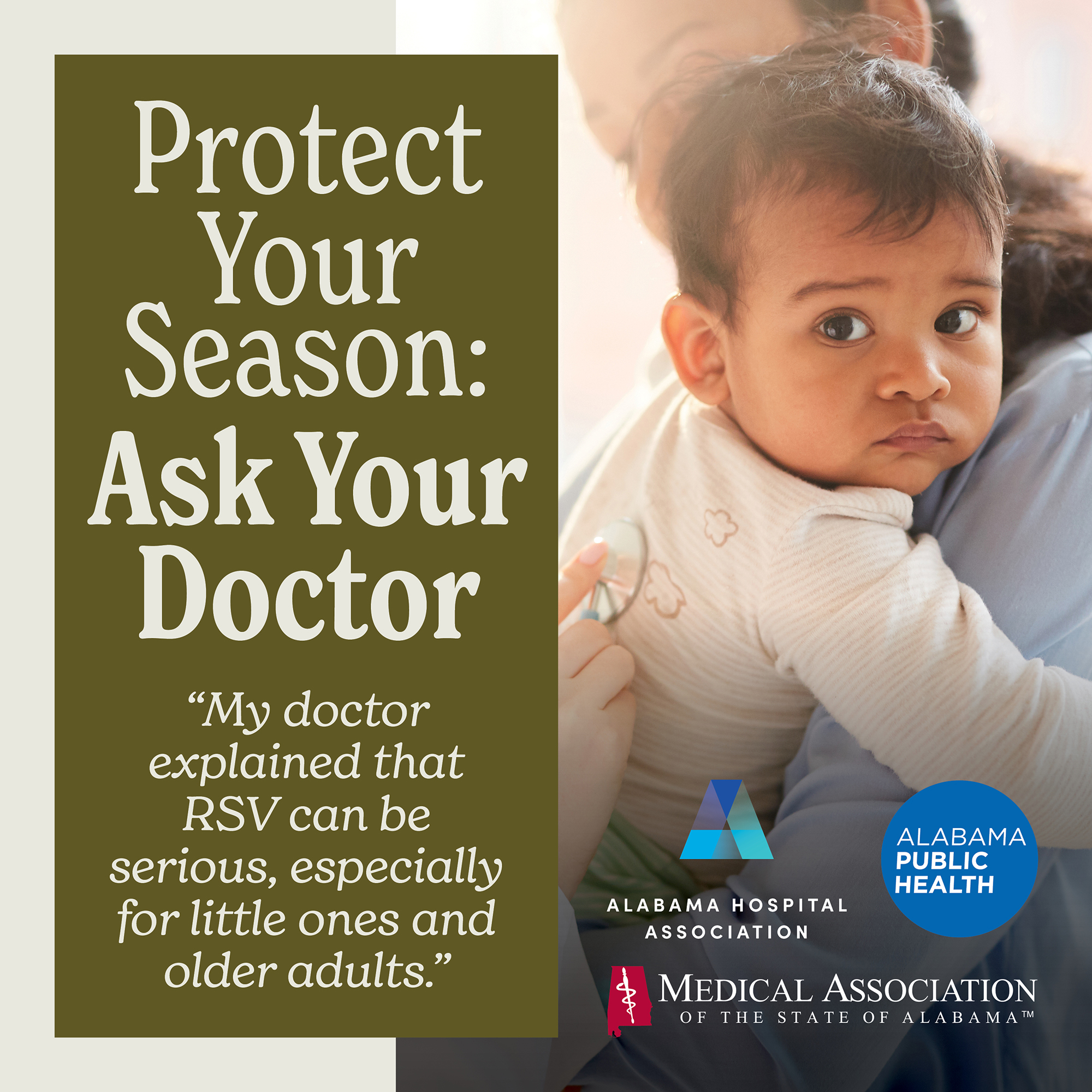
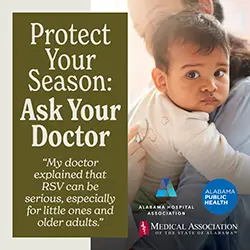
Respiratory syncytial (sin-SISH-uhl) virus, or RSV, is a common respiratory virus that usually causes mild, cold-like symptoms. Most people recover in a week or two, but RSV can be serious. Infants and older adults are more likely to develop severe RSV and need hospitalization.The
RSV vaccine is recommended for all adults over age 75, those aged 50-74 with certain health conditions that increase the risk of severe RSV disease, and pregnant women between 32 and 36 weeks of pregnancy. RSV immunization is also recommended for all infants up to 9 months of age if the vaccine was not given during pregnancy, and for some infants and children up to age 19 months.
For more information, visit the CDC's RSV Vaccines page.
Pneumonia
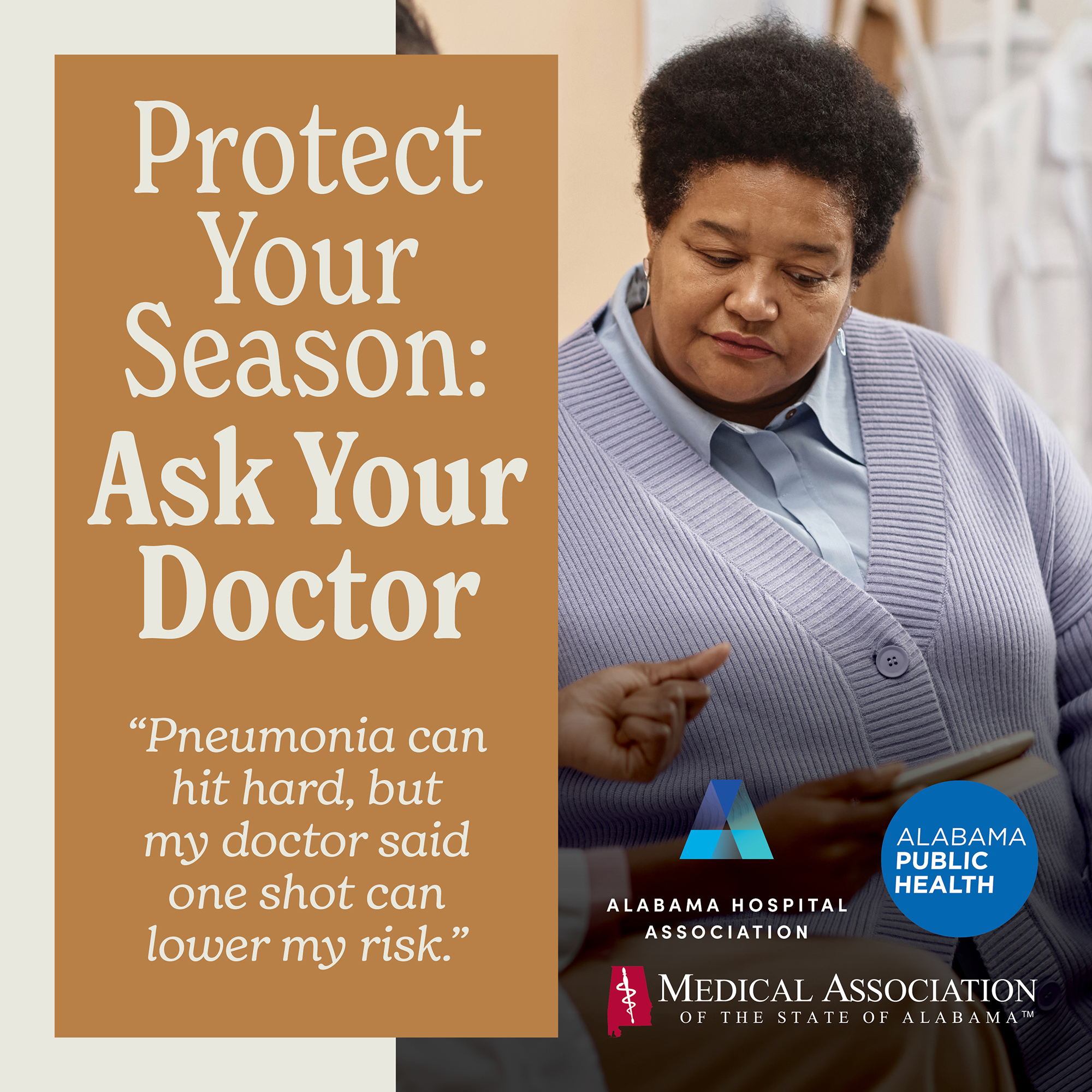
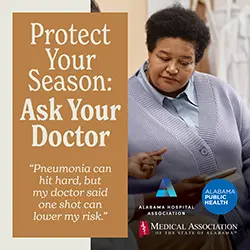
Pneumococcal disease can affect people of any age. However, young children and older adults are at risk of serious illness and death due to this disease. The CDC recommends pneumococcal vaccination for all children younger than 5 years old and all adults 50 years or older. Even if you have received a pneumococcal vaccine in the past, you may be due for an updated vaccine.
In the United States, there are two kinds of vaccines that help prevent pneumococcal disease:
- Pneumococcal conjugate vaccines (PCV15, PCV20, and PCV21)
- Pneumococcal polysaccharide vaccine (PPSV23)
For more information, visit the CDC's Pneumococcal Vaccination page.
COVID-19
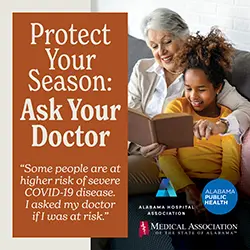
Parents of children and anyone considering the COVID-19 vaccine should talk to their doctor about the vaccine's risks and benefits. Vaccination is particularly important for people at higher risk of developing serious complications.
Get Vaccinated
Protect yourself against several infectious diseases. Schedule an appointment with your doctor or county health department today!
Contact your local county health department to see if they offer the RSV and pneumococcal vaccines. COVID-19 and flu vaccines are available at Alabama county health departments, select retail pharmacy locations, and other providers throughout the state. To find a vaccine clinic near you, visit vaccinefinder.org.
For more info, visit:
- VaccineInformation.org from Immunize.org
- HealthyChildren.org from the American Academy of Pediatrics
- Children's Hospital of Philadelphia's Vaccine Education Center
- American Medical Association Vaccine Recommendations
Campaign Materials
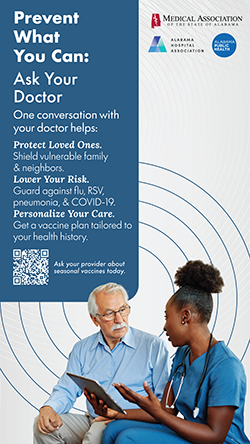
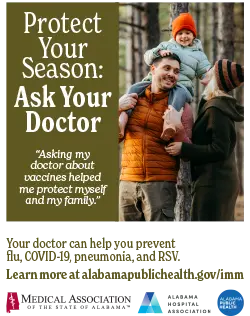
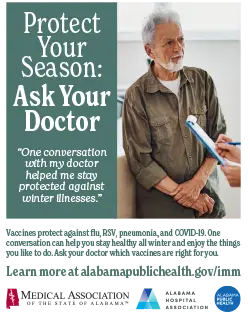
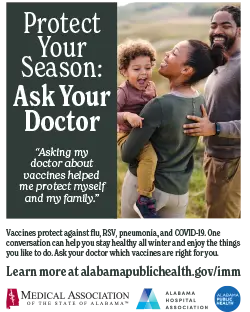
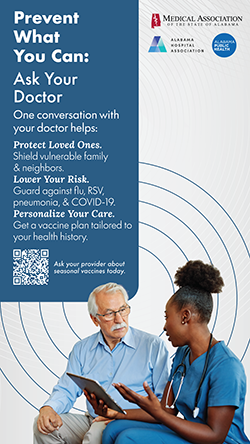
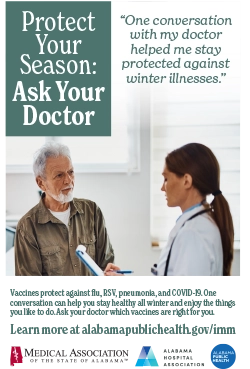
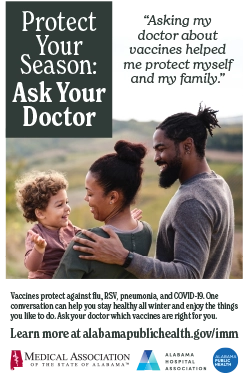
We encourage you to download and share the following print and digital materials. If sharing on social media, please use the following social media messaging and hashtags:
Vaccines protect against flu, RSV, pneumonia, and COVID-19. One conversation can help you stay healthy all winter and enjoy the things you like to do. Ask your doctor which vaccines are right for you. Visit alabamapublichealth.gov/immunization/ask.html for more.
Hashtag for X: #AskYourDoctor
Hashtags for Instagram: #flu #RSV #pneumonia #covid #RespiratoryIllness #VaccinesWork #PublicHealth #PublicHealthIsHere #AlabamaPublicHealth


Page last updated: October 2, 2026