

Zoonoses
Zoonoses are diseases that can spread between animals and humans. Every year, millions of people and animals around the world are affected by zoonotic diseases. Some zoonoses, like Rabies, are transmitted to humans from pets or other mammals. Others, like Salmonellosis, may be acquired from contact with birds and reptiles.
Vector-borne diseases are zoonotic diseases transmitted by arthropods like Mosquitoes or Ticks. For example, Lyme Disease and Spotted Fever Rickettsiosis are vector-borne bacterial diseases spread by ticks. If a vector-borne disease is caused by a virus and transmitted through the bite of an infected arthropod, it can be further classified as an arbovirus. Zika virus, West Nile Virus, and Chikungunya virus are examples of arboviruses that are spread to humans by mosquitoes.
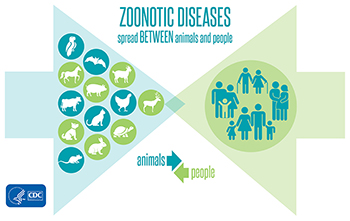
Some additional examples of zoonotic diseases include:
- Anthrax (CDC)
- Brucellosis (CDC)
- Campylobacteriosis (CDC)
- Chagas Disease (CDC)
- Ebola (ADPH)
- New Age Screwworm (CDC)
- Plague (CDC)
- Q Fever (CDC)
- Ringworm (CDC)
- Tularemia (CDC)
What's New!
The Reemergence of New World Screwworm: A Flesh-Eating Parasite
New World Screwworm (NWS) myiasis is typically a disease of animals, especially livestock, but can also affect wildlife, pets, and people. NWS is typically found in South America, Cuba, Haiti, and the Dominican Republic, but Mexico and countries in Central America are reporting cases in both animals and people. You may be at an increased risk for NWS infestation if you travel to areas where the flies are present, particularly in areas near infested livestock or other infested animals, and if you have an open wound. Visit the CDC About New World Screwworm page for additional information on New World Screwworm.
Salmonella Outbreaks Alert: Staying Safe Around Backyard Poultry
The Centers for Disease Control and Prevention (CDC) and public health officials are investigating multiple multistate outbreaks of Salmonella infections linked to contact with backyard poultry, including chickens and ducks. Cases have been reported in several states, with children under 5 years old making up a significant portion of illnesses. Backyard poultry can carry Salmonella germs even when they appear healthy and clean, and the bacteria can easily spread through contact with birds, eggs, feed containers, coops, or other items in their environment. Symptoms of Salmonella infection may include diarrhea, fever, stomach cramps, vomiting, and dehydration, with severe illness more likely in young children, older adults, and individuals with weakened immune systems. To reduce the risk of illness, wash hands thoroughly after handling poultry or eggs, keep poultry supplies outside the home, supervise children around flocks, and avoid kissing or snuggling birds. Proper egg handling and cooking are also important to prevent infection. For the latest outbreak updates and prevention guidance, visit the CDC Salmonella and Backyard Poultry page.
Chagas Disease Alert: Rare but Serious Risk from Kissing Bugs
Chagas disease, caused by the parasite Trypanosoma cruzi, is primarily spread through the bite of infected kissing bugs, which are found in the southern U.S., including Alabama. While most U.S. cases come from travel to Central or South America, kissing bugs in the U.S. can potentially transmit the parasite to humans. Early infection may cause fever, fatigue, or swelling near the bite or around the eye, but if untreated, the disease can become chronic and lead to serious heart or digestive problems years later. Kissing bugs often live in cracks and crevices of homes or animal shelters and feed on both people and pets at night. Sealing up entry points, reducing outdoor lighting, and keeping sleeping areas clean can help prevent exposure. For prevention tips and more information on Chagas Disease, visit the CDC Chagas Disease website. You can also explore this additional resource: Chagas Disease Fact Sheet (available in English | Spanish).
Resources
- Psittacosis Fact Sheet
- After you touch ducklings or chicks, wash your hands.
- National Association of State Public Health Veterinarians (NASPHV)
- Combating Antibiotic Resistance in People and Animals (CDC)
- State Turtle-Associated Salmonellosis Laws (CDC)
- Consumer Health Information for Pet Turtles (FDA)
- Pet Turtles: A Common Source of Salmonella (FDA)
- Stay Healthy Around Animals Coloring Book (CDC)
- Wash Your Paws Poster (CDC)
- How To Stay Healthy Around Pets (CDC)
- Stay Safe and Healthy While Feeding Reptiles and Amphibians CDC)
- 5 Things To Do Right After Visiting Animals (CDC)
- Stay Healthy Around Small Pets (CDC)
- Healthy Families and Flocks (CDC)
- Wash Hands When Leaving Animal Exhibits (CDC)
Want to learn more about One Health conditions? Check out the ADPH or CDC websites for more.
Page last updated: June 30, 2026


